Acoustic vs. Thermal vs. Tracer Gas: Which Leak Detection Method is Fastest for an Emergency?
When you have a water leak emergency, response time is everything. We break down the speed and application of acoustic, thermal imaging, and tracer gas detection methods.
When Every Second Counts: Choosing the Right Detection Tool
Discovering a leak, especially a hidden one, triggers an immediate need for a fast, accurate solution. In an emergency, the method our engineers use isn't just about finding the leak. It's about finding it now to prevent catastrophic water damage. The core technologies we deploy are acoustic detection, thermal imaging, and tracer gas. Each has a specific role in our 24/7 emergency toolkit, with speed and precision as our guiding principles.
Speed Showdown: Method-by-Method Emergency Analysis
Acoustic Leak Detection: The First Responder. This is often our go-to for initial emergency assessment. Our engineers use sensitive ground microphones and correlators to listen for the sound of water escaping under pressure. In many cases, this allows for a rapid pinpointing of the leak's location without invasive digging or drilling. It's fast, highly targeted, and gets us moving toward a repair with minimal delay, making it ideal for suspected leaks in pressurized pipes under floors or behind walls.
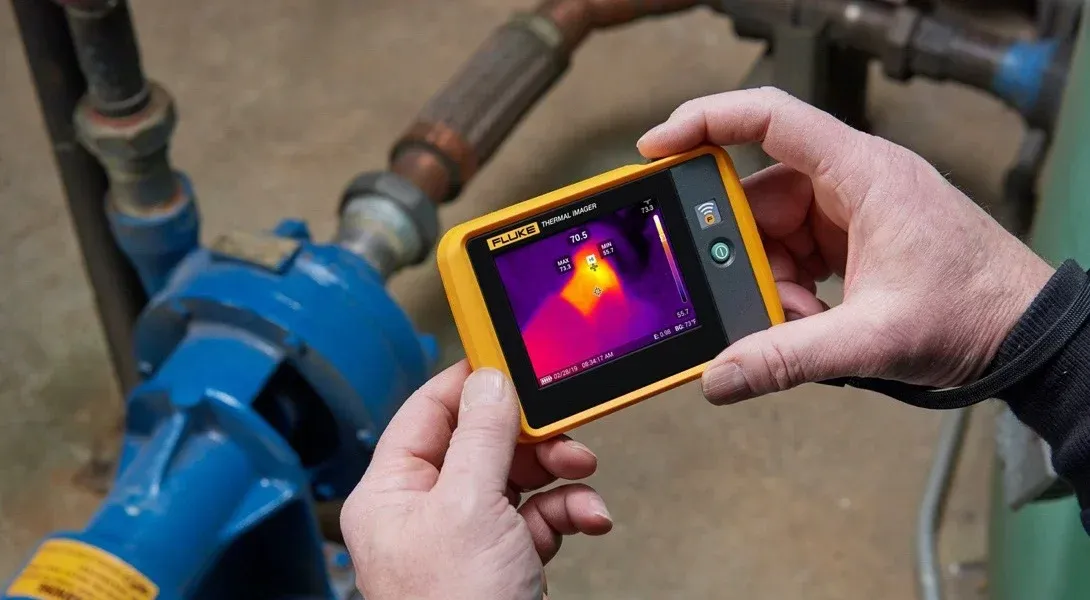
Thermal Imaging Cameras: Seeing the Invisible. When time is critical, thermal cameras give us an immediate visual map of temperature differences behind walls or under floors. Escaping water changes the surface temperature, which shows up clearly on our screens. This method provides a swift, non-invasive scan of large areas to narrow down the problem zone fast. It's exceptionally effective for locating underfloor heating leaks or tracing the path of moisture from a leak you can't see but can feel.
Tracer Gas Detection: For the Trickiest, Most Elusive Leaks. When a leak is exceptionally slow, or in complex pipe networks where other methods haven't yielded a result, we turn to tracer gas. We introduce a safe, inert gas into the pipework. Using a highly sensitive detector, we trace the gas as it escapes from the leak point. While the setup is more methodical, for certain stubborn emergencies, like leaks in under-slab pipes or heating systems, it provides the definitive answer we need to execute a precise, fast repair, avoiding endless exploratory damage.
Our Protocol: Matching the Emergency to the Method
Our emergency response isn't about using one tool for everything. It's about having the full arsenal and the expertise to choose the fastest, most effective path to a solution. On a 24/7 emergency call, we assess the situation immediately. For a loud, obvious leak under a floorboard, an acoustic correlator gives us a pinpoint location in minutes. For a mysterious damp patch spreading across a ceiling, the thermal camera can quickly rule out areas and identify the source. And when all else points to a leak but we can't find it, tracer gas becomes the critical tool to end the search and start the fix. Our goal is always the same: deploy the right technology to stop your leak with maximum speed and minimum disruption.
Don't waste time guessing. If you have a leak, suspected or confirmed, call for an emergency response. We dispatch engineers equipped with all three technologies to ensure the fastest possible resolution, day or night.
How we help with this
If the article describes a problem you actually have, these are the visits that deal with it.
- tracer gas leak detection
For leaks the other methods cannot reach, including buried pipework.
- acoustic leak detection
Ground microphones and correlators on a pressurised pipe.
- burst pipe repair
A split or burst pipe isolated and repaired, day or night.
Frequently asked questions
Which leak detection method is the fastest in an emergency?
There's no single fastest method for all situations. In our emergency protocol, acoustic detection is often the quickest first step for pressurized pipe leaks, while thermal imaging provides immediate visual scans for underfloor or wall leaks. We choose the tool that will locate your specific leak fastest to enable a rapid repair.
Do you use all these methods on every emergency call?
Our engineers are trained in and carry equipment for all these methods. We start with the technology best suited to your leak's symptoms for a swift diagnosis. If the situation is complex, we seamlessly switch or combine methods to find the source without delay, ensuring no time is wasted during an emergency response.
Is tracer gas detection slow? When would you use it in an emergency?
While the setup is precise, tracer gas is often the fastest solution for the most elusive leaks. In an emergency where other methods fail to locate a leak, particularly in concrete slabs or complex pipe runs, tracer gas provides a definitive, accurate location. This allows us to make one precise repair cut instead of causing extensive exploratory damage, ultimately resolving the emergency more efficiently.